































































































Some investors have midterm election jitters. Here’s what history shows about stocks
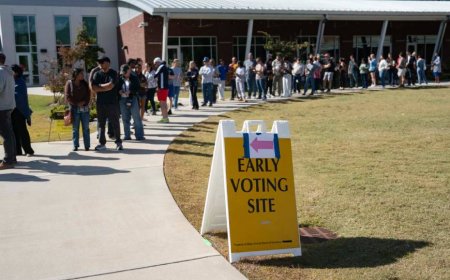
With the midterm elections approaching, some investors worry about how the results will impact their portfolios. Whether their anxiety is warranted is another question. Nearly half of surveyed investors — 48% — said they are concerned about the Nov. 3 midterms' potential impact on the stock market, according to Morgan Stanley Wealth Management's latest quarterly retail investor pulse survey, conducted Oct. 1-23 among 953 U.S. investors.
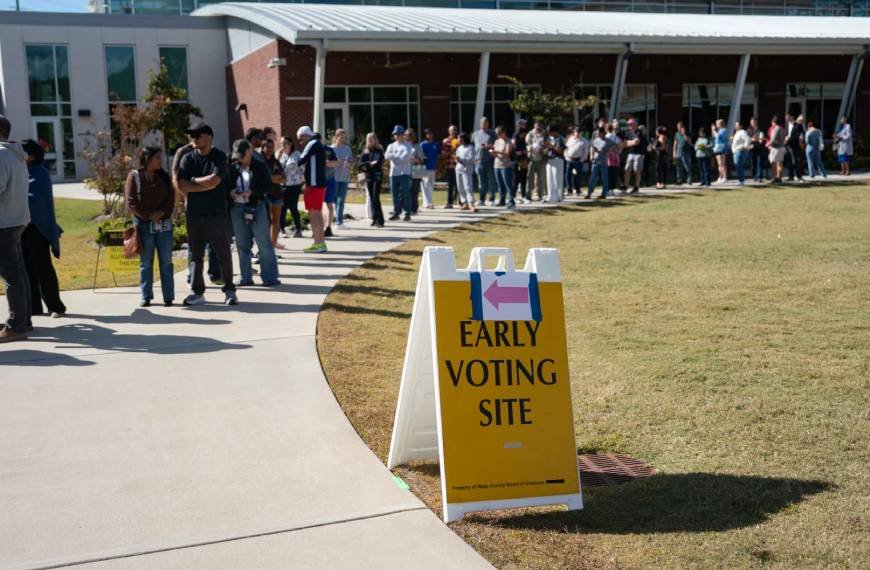
Separately, the Nationwide Retirement Institute, a research and education division of insurer Nationwide, found that 56% of surveyed investors said they feel more anxious because of the elections, and 75% believe the results could meaningfully affect their long-term financial plans. That survey was conducted Aug. 24-Sept. 11 among 2,029 investors with investable assets of at least $10,000.
"This summer and fall, the midterms have been probably the first topic of conversation with almost every [client] meeting that I've had," said John Mullen, managing director, president and CEO of Parsons Capital Management in Providence, Rhode Island. The firm ranked No. 25 on CNBC's Financial Advisor 100 list for 2026.
Read coverage of CNBC's 2026 Financial Advisor 100 list, including stories featuring ranked firms and their advisors:
While it's impossible to predict how the markets will behave following the midterms, historical data offers some perspective on how stocks have performed around past midterm elections.
Voters will be heading to the polls amid broad concerns about affordability and dissatisfaction with President Donald Trump's handling of the economy. The buildout of artificial intelligence through data centers, as well as the Iran war, also weigh heavily on voters' minds at a time when Republicans control both chambers of Congress.
Midterms historically have been unfavorable for the president's party, which has gained House seats in only three such elections since 1906, according to an analysis by Michael Townsend, Charles Schwab's managing director of legislative and regulatory affairs.
Based on polls, Democrats are favored to take control of the House — they lead Republicans on a generic ballot by about 9 percentage points as of Oct. 28, according to FiftyPlusOne, a website that tracks poll results. Democrats are also narrowly favored to win the Senate, according to DecisionDeskHQ, an election forecaster. The new Congress is scheduled to convene Jan. 3.
If Democrats take control of at least one chamber of Congress, the result will be a divided government instead of the unified government — the House, Senate and presidency all of the same party — that's been in place during Trump's second term.
An analysis of the S&P 500 index's performance over the past 50 years by asset manager Janus Henderson shows heightened market volatility when power in Washington is split between Republicans and Democrats, but little difference in the annualized price returns under a unified or divided government — 8.73% and 9.24%, respectively.
"Higher volatility during years with split control may have been caused by policy uncertainty, but a counterargument is that split government potentially insulated voters — and the economy — from some of the most ambitious intentions of a single party," wrote Seth Meyer, global head of client portfolio management for Janus Henderson. "In short, gridlock may be good."
Meanwhile, stock market volatility has tended to run higher in midterm election years, particularly in the months leading up to the election, according to a Capital Group analysis. Since 1970, median annualized volatility — a measure of market fluctuations — during midterm years has been nearly 16% vs. 13% in other years.
Nevertheless, "after the midterms, in almost every case, we've seen a rebound as the market settles into the known and [investors] kind of get the jitters out about what they didn't know before the election happened," said Michael Gibb, president and CEO of Godsey & Gibb Wealth Management in Richmond, Virginia. The firm ranked No. 89 on CNBC's Financial Advisor 100 list for 2026.
In midterm election years since 1974, the S&P 500 has averaged a 5.7% return in the three months right after a midterm election, with positive returns in 11 of the 13 years analyzed, according to the analysis by Schwab's Townsend. Over the six months following the midterms, the index has averaged a 12.4% return, with positive returns in all 13 years.
Separately, in 2024, Fidelity Investments analyzed S&P 500 returns from 1950 through 2023, dividing the presidential cycle into four successive 12-month periods running from Nov. 30 to Nov. 30. Average returns were 8.3% in the first year following a presidential election; 3.4% in year two, which is when the midterms are; 14.7% in year three, right after the midterms; and 9.1% in year four, the next presidential election year. The figures include reinvested dividends.
As for how the economy has performed after a midterm election, it's been mixed. Across 19 midterm cycles from 1950 through 2022, economic growth accelerated in nine cycles, slowed in nine and remained the same in one, according to an Oct. 26 research note by Sung Won Sohn, professor of finance and economics at Loyola Marymount University and chief economist at SS Economics.
And inflation? Another mixed bag, according to Sohn: It declined in 11 of the 19 post-midterm years and increased in eight. Yet average inflation remained relatively the same, slipping from about 3.63% in midterm years to 3.56% the following year.
Nevertheless, some investors may want to shift their holdings by rebalancing their portfolios. After the S&P posted an 18.11% loss in 2022, including reinvested dividends, it had a total return of 88.11% from the start of 2023 through the end of 2025. So far this year, its total return is 14.17% through Oct. 28.
These gains mean some investors whose portfolios started the period with, say, an intentional 80% stock and 20% bond allocation may now have more stocks than they intended.
"If there are investors who are overexposed to stocks because of the multiyear bull market we've been in, then it's not a bad idea to bring yourself back to the risk tolerance you set for yourself in a calculated and non-emotional manner," Gibb said. "But as for clients who are where their allocation should be over the long term, we wouldn't recommend making a change."
Likewise, investors who are nervous and may not be able to stomach volatility may want to reassess their portfolio's risk level to ensure it aligns with their comfort level and long-term financial goals.
"If you're not comfortable with what your asset mix is, if it's too risky for your own level of risk tolerance, then you have to make a change," Mullen said.
"We always tell our clients there's no magic number for percentages in stocks, bonds, cash and alternatives," he said. "It's whatever you're comfortable with, so you don't let your emotions get the best of you and go all to cash when the market's falling."
Additionally, making big moves can upend your long-term investment strategy.
"If you make too many changes and get away from what's worked for you, you run the risk of being disappointed if things don't turn out the way that you're expecting," Mullen said.